When an OEM integrator or procurement engineer starts selecting a laser distance sensor, the conversation often begins with one number: “I need a sensor that can measure up to X meters.”
Range is important, but it is only one part of the specification.
A laser distance sensor with a 100 m rated range may not be the right choice for a 50 m application if it cannot provide the required accuracy, measurement rate, interface, environmental protection, or operating temperature.
Understanding how to choose a laser distance sensor therefore requires looking at the complete specification rather than comparing maximum range alone.
This guide explains the 7 key laser distance sensor specifications engineers should evaluate during product selection:
- Measurement range
- Accuracy
- Measurement rate and response time
- Communication interface
- Wavelength and laser class
- Housing and IP rating
- Operating temperature
By the end, you will have a practical framework for comparing laser distance sensors for OEM equipment, industrial automation, robotics, outdoor monitoring, and other measurement systems.
How to Choose a Laser Distance Sensor: Start With the Application
Before comparing individual models, define what the sensor actually needs to do.
At minimum, determine:
- Required measurement range
- Required accuracy
- Measurement frequency or response time
- Indoor or outdoor environment
- Target material and reflectivity
- Communication interface
- Power supply
- Operating temperature
- Required IP protection
- Maximum sensor dimensions and weight
These requirements should be defined before selecting a specific model.
For OEM projects, this approach is especially important because a sensor is part of a larger system. A model with excellent optical performance may still be unsuitable if its interface, dimensions, power consumption, or environmental rating do not match the product design.
1. Measurement Range: Rated Range vs. Usable Range
Range is usually the first specification engineers see on a laser distance sensor datasheet.
However, the maximum advertised range should not automatically be treated as the guaranteed operating range for every target and environment.
Actual measurement performance can depend on:
- Target reflectivity
- Target color
- Measurement angle
- Ambient light
- Atmospheric conditions
- Beam divergence
- Sensor optical design
For example, a sensor may achieve a longer range on a highly reflective white target than on a dark or low-reflectivity surface.
How to Evaluate Laser Distance Sensor Range
When comparing range specifications, check:
- Minimum measurement distance
- Maximum measurement distance
- Target reflectivity used during testing
- Indoor or outdoor test conditions
- Accuracy at the required distance
- Performance under ambient sunlight
- Recommended operating range
Do not compare two sensors only by their maximum range.
A better question is:
“Can this sensor reliably achieve the required accuracy at my actual target distance and target surface?”
Common Range Selection Mistake
Suppose an application requires reliable measurement at 60 m.
Selecting a sensor simply because its headline specification says “100 m” may not be sufficient.
Instead, confirm whether the 60 m measurement is supported under the expected target reflectivity and environmental conditions.
For OEM design, it is also sensible to leave some engineering margin rather than designing the system around the absolute maximum range.
2. Accuracy: What Does ±1 mm Really Mean?
Accuracy is one of the most important laser distance sensor specifications, but it is also one of the easiest to misunderstand.
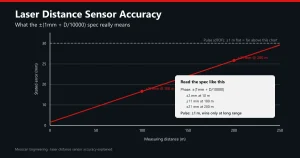
A sensor advertised as having “±1 mm accuracy” may use an accuracy specification that changes with measurement distance.
For example, a datasheet may specify:
±(1 mm + D × 1/10000)
where D is the measured distance.
At different distances, the calculated tolerance would be approximately:
| Distance | Approximate Accuracy |
|---|---|
| 1 m | ±1.1 mm |
| 10 m | ±2 mm |
| 50 m | ±6 mm |
| 100 m | ±11 mm |
The exact interpretation depends on the manufacturer’s specification and test conditions, but the example illustrates an important principle:
Accuracy should always be evaluated at the distance where the sensor will actually operate.
Accuracy vs. Resolution vs. Repeatability
These terms should not be treated as interchangeable.
Accuracy describes how close the measured value is to the actual distance.
Resolution describes the smallest measurement increment the system can distinguish or report.
Repeatability describes how consistently the sensor produces similar measurements under the same conditions.
A sensor can have high display resolution without having equivalent measurement accuracy.
How to Compare Accuracy
When comparing laser distance sensors, check:
- Accuracy formula
- Accuracy at your working distance
- Repeatability
- Resolution
- Temperature conditions
- Target conditions
- Measurement mode
For OEM integration, the specification at the actual working distance is much more useful than a headline accuracy number measured at a short distance.
For applications that require a more detailed comparison of measurement principles, see our guide to Phase vs Pulse Laser Distance Sensor technology. It explains how phase-shift and time-of-flight measurement differ in range, accuracy, measurement speed, and typical OEM applications.
3. Measurement Rate and Response Time
Measurement rate describes how frequently a sensor can produce distance measurements and is commonly expressed in Hz.
Different applications require very different measurement rates.
| Application | Typical Measurement Requirement |
|---|---|
| Static distance measurement | 1–3 Hz |
| Liquid level monitoring | 3–10 Hz |
| Conveyor positioning | 10–30 Hz |
| AGV/AMR applications | 30–100 Hz |
| Dynamic robotic systems | 100–500 Hz |
| High-speed measurement | Application dependent |
These values are examples rather than universal requirements. The correct rate depends on target speed, control-loop requirements, filtering, and system response time.
Measurement Rate vs. Response Time
Measurement frequency and response time are related but different specifications.
A sensor may provide measurements at 100 Hz, but that does not necessarily mean the complete system responds to a change within exactly 10 ms.
For dynamic OEM systems, also check:
- Response time
- Output latency
- Measurement frequency
- Filtering
- Averaging
- Communication delay
Faster Is Not Always Better
A 500 Hz sensor is unnecessary for a tank-level application that only needs a measurement every second.
Higher measurement rates can also affect power consumption, data processing, and system cost depending on the sensor architecture.
Choose the measurement rate according to the application rather than automatically selecting the highest available value.
4. Communication Interface: How Will the Sensor Connect to Your System?
The communication interface is sometimes overlooked during early product selection, even though it can have a major impact on integration.
Common interfaces include:
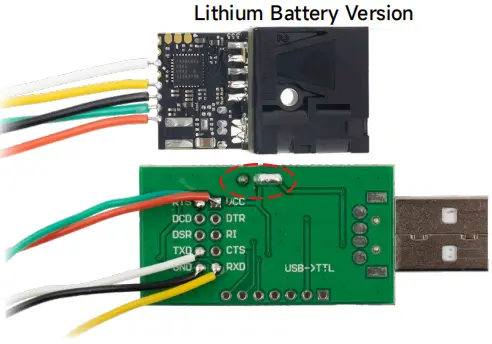
UART / TTL
UART is widely used for embedded OEM products and direct communication with microcontrollers.
It is particularly suitable when the sensor is installed close to the main controller.
RS232
RS232 is commonly used with industrial PCs and legacy equipment.
It is generally intended for point-to-point communication rather than multi-device networks.
RS485
RS485 uses differential signaling and is widely used for industrial equipment where longer cable runs and electrical-noise resistance are important.
It can also support multi-device communication when combined with an appropriate protocol.
Modbus
Modbus is a communication protocol rather than a physical electrical interface.
Modbus RTU commonly operates over RS485 and is widely used in industrial automation.
CAN
CAN is designed for reliable communication in electrically noisy environments and is common in mobile equipment, vehicles, robotics, and AGV/AMR systems.
I2C and SPI
I2C and SPI are primarily intended for short-distance communication between electronic components or modules inside an embedded system.
How to Select the Interface
As a general starting point:
- Embedded controller → UART / TTL
- Industrial cabinet → RS485
- Multi-sensor network → RS485 + appropriate protocol
- Mobile equipment or AGV → CAN
- Short PCB-level connection → I2C or SPI
- Industrial PC / legacy equipment → RS232
The actual choice should be based on cable length, electrical environment, network architecture, controller compatibility, and protocol requirements.
Common Interface Mistake
Using a simple TTL/UART connection over a long industrial cable can create signal-integrity problems, especially around motors, variable-frequency drives, relays, and other sources of electrical noise.
For long industrial connections, a differential interface such as RS485 or CAN may be more appropriate.
5. Wavelength and Laser Class
Wavelength affects the visibility of the laser and influences the optical design of the measurement system.
Common laser wavelengths used in distance measurement include:
| Wavelength | Typical Description | Common Applications |
|---|---|---|
| 510–550 nm | Green visible laser | Outdoor aiming and alignment |
| 620–690 nm | Red visible laser | Indoor and embedded applications |
| 905 nm | Near-infrared | Pulse ToF and long-range ranging |
| 1535 nm | Near-infrared | Long-range ranging and specialized applications |
The appropriate wavelength depends on the application.
If an operator needs to see the laser spot clearly outdoors, a green laser can provide a visibility advantage.
For embedded industrial systems where the laser does not need to be visible during normal operation, wavelength may be less important than measurement performance, cost, power consumption, and optical design.
Laser Class Is a Separate Specification
Laser class describes the safety characteristics of the laser product. It should not be treated as a measurement-performance rating.
When evaluating a laser distance sensor, check:
- Laser class
- Wavelength
- Optical output power
- Applicable safety standards
- Intended operating environment
For public-facing or uncontrolled-access applications, the required laser safety classification should be determined from the applicable standards and risk assessment rather than assumed from wavelength alone.
For a detailed comparison of visible wavelengths, see our guide to red vs. green laser sensors.
6. Housing and IP Rating
For industrial and outdoor applications, the sensor’s housing can be just as important as its optical specifications.
The IP rating describes protection against solids and water under defined test conditions.
Common ratings include:
IP54
Provides limited dust protection and protection against water splashes from specified directions.
Suitable applications depend on the actual installation environment.
IP65
Provides dust-tight protection and resistance to water jets under the applicable test conditions.
Often used for exposed industrial equipment.
IP67
Provides dust-tight protection and temporary immersion protection under specified test conditions.
This can be useful for sensors exposed to rain, splashing, or temporary water immersion.
IP68
Provides protection for continuous or extended immersion under conditions specified by the manufacturer.
The exact immersion depth and duration are defined by the product specification, so IP68 should not be interpreted as a universal underwater rating.
How to Select an IP Rating
Consider:
- Indoor or outdoor installation
- Rain exposure
- Dust
- Water spray
- Washdown procedures
- Temporary immersion
- Condensation
- Enclosure design
Also remember that the IP rating of the complete sensor assembly matters. A highly protected housing does not compensate for an exposed connector or cable entry.
7. Operating Temperature
Temperature is often overlooked during sensor selection because a sensor may work perfectly during laboratory testing.
Real installations can be much more demanding.
Common industrial operating ranges may include:
- -10 °C to +50 °C
- -20 °C to +60 °C
- -40 °C to +85 °C for specialized designs
The appropriate range depends on the application and the specific sensor.
Outdoor Applications
For outdoor equipment, consider:
- Lowest expected winter temperature
- Highest summer temperature
- Direct solar heating
- Enclosure temperature
- Continuous operating duration
Do not simply use the local air-temperature range. An enclosure exposed to direct sunlight can become significantly hotter than the surrounding air.
Cold Storage and Freezer Applications
If the sensor will operate in a cold-storage environment, check the minimum operating temperature of the complete module.
For very low temperatures, also consider:
- Condensation
- Connector performance
- Cable flexibility
- Optical window contamination
- Startup behavior
High-Temperature Applications
For equipment installed near furnaces, engines, motors, or other heat sources, check both the ambient temperature and the actual temperature at the sensor housing.
A sensor rated for normal industrial temperatures may require additional thermal protection in these environments.

Laser Distance Sensor Selection Matrix
Once the seven specifications are understood, you can combine them into an application-level selection framework.
| Application | Typical Range | Accuracy Priority | Rate | Interface | Environment |
|---|---|---|---|---|---|
| AGV/AMR positioning | 0–30 m | High | 30–100 Hz | CAN / RS485 | Indoor / industrial |
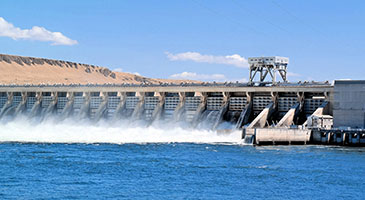
| Liquid level measurement | 0–10 m | Medium–High | 3–10 Hz | RS485 / Modbus | Industrial / outdoor |
| Crane positioning | 0–50 m | High | Around 10 Hz | RS485 | Industrial |
| Outdoor surveying | 0–100 m+ | High | Application dependent | UART / wireless | Outdoor |
| Traffic or vehicle ranging | 0–200 m+ | Application dependent | High | RS485 / CAN | Outdoor |
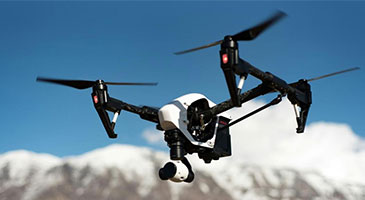
| UAV ranging | Hundreds to thousands of meters | Application dependent | Application dependent | UART / other | Outdoor |
| 3D scanning | Application dependent | High | Application dependent | USB / Ethernet / wireless | Application dependent |
These are starting points rather than universal specifications. The final sensor should be selected using the actual range, accuracy, target, environment, and system architecture.
A Simple Laser Distance Sensor Selection Checklist
If you are comparing several models, create a specification sheet with these fields:
| Requirement | Your Application | Sensor Specification |
|---|---|---|
| Measurement range | ___ m | ___ m |
| Required accuracy | ±___ mm / m | ___ |
| Measurement rate | ___ Hz | ___ Hz |
| Response time | ___ ms | ___ ms |
| Interface | ___ | ___ |
| Protocol | ___ | ___ |
| Wavelength | ___ nm | ___ nm |
| Laser class | ___ | ___ |
| IP rating | ___ | ___ |
| Operating temperature | ___ °C to ___ °C | ___ |
| Supply voltage | ___ V | ___ V |
| Current consumption | ___ mA | ___ mA |
| Dimensions | ___ mm | ___ mm |
| Weight | ___ g | ___ g |
This makes it much easier to compare sensors objectively and identify specifications that do not meet the system requirements.
The Most Common Laser Distance Sensor Selection Mistakes
Choosing Only by Maximum Range
A longer range does not automatically mean better performance.
If you need 30 m measurement with millimeter-level accuracy, a sensor optimized for several kilometers may be unnecessary.
Comparing Accuracy Without Considering Distance
Always compare accuracy at the same measurement distance.
An advertised ±1 mm specification at 1 m cannot be directly compared with ±3 mm at 50 m without understanding the complete accuracy conditions.
Confusing Resolution With Accuracy
A display resolution of 1 mm does not necessarily mean measurement accuracy of ±1 mm.
Always read the full accuracy specification.
Choosing the Highest Measurement Frequency
More Hz is not automatically better.
Select the rate according to the speed of the target and the response requirements of the control system.
Ignoring the Communication Environment
The interface should match the cable length, electrical noise, controller, and network architecture.
Selecting IP Rating Without Considering the Installation
IP67 does not automatically make a sensor suitable for every outdoor application.
Consider sunlight, temperature, condensation, chemical exposure, vibration, connectors, and mounting conditions as well.
Selecting a Sensor Before Defining the Target
The target surface can have a major effect on measurement performance.
Define whether the sensor will measure:
- White surfaces
- Dark surfaces
- Metal
- Plastic
- Liquid
- Transparent materials
- Rough or irregular surfaces
Whenever possible, test the actual target material.
How to Choose a Laser Distance Sensor for an OEM Project
For OEM integration, the selection process should go beyond the basic datasheet.
After identifying the required optical and environmental specifications, also evaluate:
- Module dimensions
- Weight
- Mounting method
- Connector
- Communication protocol
- Firmware commands
- Power consumption
- Housing options
- Calibration requirements
- Sample availability
- Customization options
- Production volume
- Long-term supply capability
A sensor that meets the optical requirements but cannot be mechanically or electrically integrated into the final product may create more engineering work than expected.
For this reason, OEM buyers should evaluate the complete module and supplier capability, not only the headline range and accuracy.
How to Request the Right Laser Distance Sensor
Before contacting a manufacturer, prepare the following information:
- Required measurement range
- Required accuracy at that range
- Measurement frequency
- Response time
- Communication interface
- Operating environment
- Required IP rating
- Operating temperature
- Target material
- Target reflectivity, if known
- Power supply
- Maximum dimensions and weight
- Expected production volume
The more complete these requirements are, the easier it is for an engineering team to recommend an appropriate module.
For an OEM project, you can also request samples for testing under your actual target, distance, lighting, temperature, and installation conditions.
Final Takeaway: How to Choose a Laser Distance Sensor
The right laser distance sensor is not necessarily the sensor with the longest range, highest accuracy, or fastest measurement rate.
The right sensor is the one whose specifications match the actual requirements of the complete application.
When selecting a laser distance sensor, evaluate these seven areas:
- Range — Can it reliably measure the required distance?
- Accuracy — Does it meet the required tolerance at the actual working distance?
- Measurement rate — Is it fast enough for the target and control system?
- Interface — Can it communicate reliably with your controller?
- Wavelength and laser class — Does the optical and safety configuration match the application?
- IP rating — Can the housing withstand the installation environment?
- Operating temperature — Can it operate reliably throughout the expected temperature range?
For OEM applications, add mechanical dimensions, power consumption, connector, firmware, customization, and long-term supply capability to the selection process.
Defining these requirements before choosing a model can reduce unnecessary cost, simplify integration, and prevent performance problems later in the product development cycle.